WRITER

Paul could write. He knew this from an early age. He also spent time as a young boy at his grandfather Isaac’s house, where he was surrounded by books, and willingly earned precious pocket money for learning poems by heart and reading recommended volumes, sometimes weighty ones like Edward Gibbon’s The Decline and Fall of the Roman Empire. His grandfather didn’t write books, but his uncle Michael did.

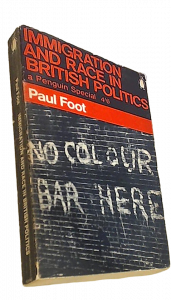
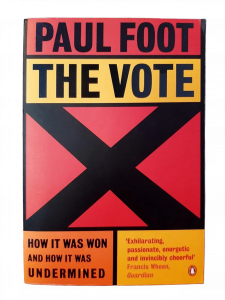
Altogether Paul wrote ten books. The first, Immigration and Race in British Politics, was published in 1965 and the last, The Vote, was published posthumously in 2005, the year after he died.  Paul also wrote numerous pamphlets and introductions to, and chapters in, a considerable number of books and pamphlets written by others.He also owned a lot of books, a state of affairs he defended in a Socialist Worker article 

Paul always gave books as gifts, usually signed ‘With love from Paul’  the title Rose Foot gave to a short privately published book about Paul and his books – books given and books received.

Why had elected socialists been so pathetic in office?

Paul spent more time thinking about and planning this book than any other. When finished, it became a manifesto of his political ideas, the culmination of a lifetime of political thought, political activity and reading. The Vote: How It was Won and How It was Undermined, Viking, London, 2005

“Much more opportunist than principled”

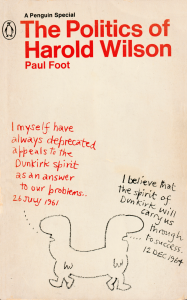
The second of Paul’s books for Penguin was published on the eve of the Labour Party conference in September 1968. It was a sharp attack on Wilson from the left, but also an analysis of the development and decline of socialist theory in the Labour Party since the 1930s. The Politics of Harold Wilson, Penguin, Harmondsworth, 1968

The central problem, he argued, was partition

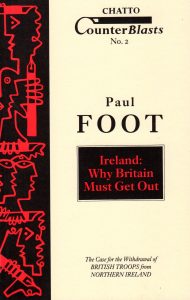
Published in the great tradition of pamphleteering, Chatto’s Counterblasts series gave some of Britian’s finest thinkers the chance to confront the big issues of the day - music to Paul’s ears. ‘There is a solution to the problem of Northern Ireland,’ he began: Britain should get out. Ireland: Why Britain Must Get Out, Counterblasts No. 2, Chatto & Windus, 1989

“How could change come about, through reform or revolution?”

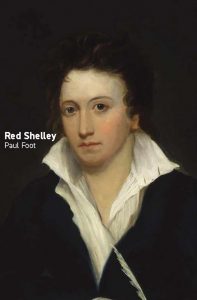
Paul didn’t accept the patronising view that Shelley was just a great lyrical poet. He writes of a political radical, a republican, atheist and feminist, whose convictions rose and fell with the popular movements of his time. Red Shelley, Sidgwick and Jackson, London, 1981

“Provide ammunition for a counter-attack”

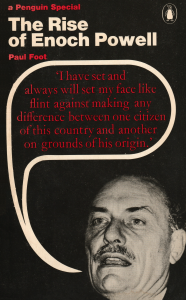
The third of Paul’s books for Penguin tracked the political transition of Enoch Powell from supporter of Empire to Little Englander. In it, Paul argued that Powell’s speeches about the threat of immigration were driven by his own chances of political advancement. The Rise of Enoch Powell, Penguin, Harmondsworth, 1969

“Something will turn up. It always does.”

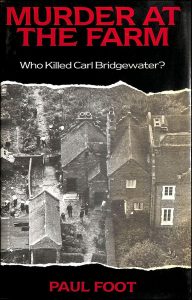
Carl Bridgewater, a 13-year-old Midlands newspaper boy, was shot dead during a robbery at an isolated farmhouse. Four Birmingham criminals were arrested and found guilty. But just four weeks later, another murder, at the farm next door, blew the case open. In a story that would run for 18 years, Paul Foot argued that the wrong men were convicted Murder at the Farm: Who Killed Carl Bridgewater? Sidgwick & Jackson, London, 1986

UNDER CONSTRUCTION

This site is a labour of love and obviously a work in progress.