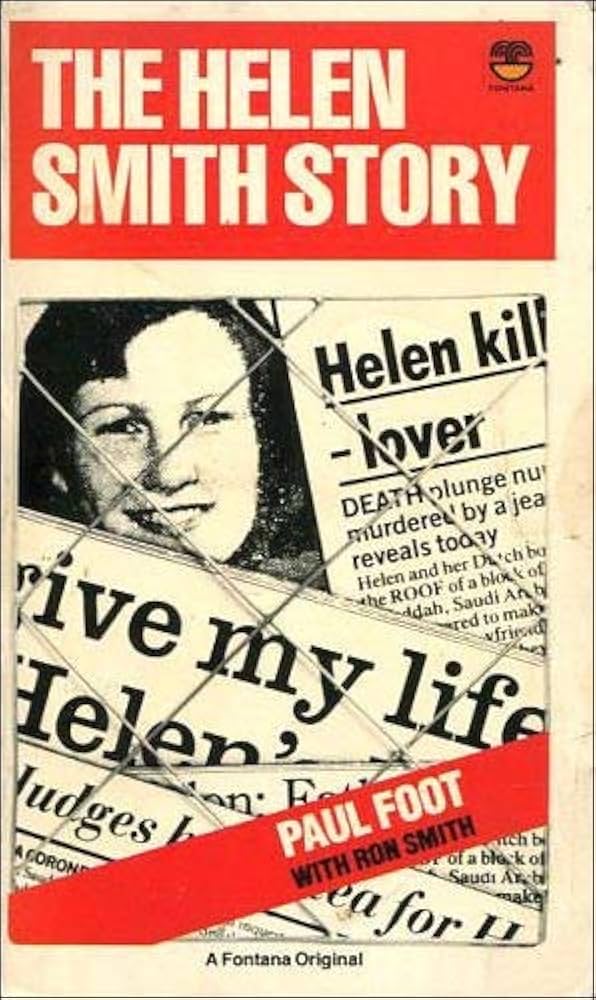
Helen Smith was a young British nurse who died in mysterious circumstances in Saudi Arabia. The official version was that she had been to a drinks party and fell to her death from the sixth-floor balcony of a flat belonging to a surgeon at the hospital where she worked. The authorities said it had been a ghastly accident.
Her father Ron Smith did not believe a word of it. When this ex-policeman went to identify his daughter’s body, he demanded to see her injuries and, when he did so, he knew there was something wrong with what he was being told and demanded an autopsy.
Paul was intrigued by the story, which first appeared as a ‘Letter from Jeddah’ in Private Eye. He had a sneaking regard for this man thrust into events over which he had no control.
The Mirror gave Paul an extraordinary amount of space, over two days in September 1980, to tell the Helen Smith story in her own words. Her father had given Paul exclusive access to her diary, which he had retrieved from her room at the nurses’ home. [Paul Foot Reporting, ‘Men, Parties and Nurse Helen’, Daily Mirror,16 September 1980. ]
Paul continued to write about the case in the Mirror, but it was in Private Eye that he kept up the pressure, issue after issue, month after month. It had become, wrote Paul, ‘a running serial – a serial of a living story, which excited the imagination of the Eye’s readership.’
Of the stories that appeared it was the saga surrounding the inquest into Helen’s death that exposed the difficulties Ron Smith was up against.
It took months for him to get Helen’s body back home to the UK, and when it was finally returned, he made two requests – the first for a post-mortem, the second for an inquest. But the West Yorkshire coroner refused the inquest request outright, claiming he had no jurisdiction. The matter went to court, and then to appeal, where Ron won his case.
It was Richard Ingram’s idea for Paul to write a book about Ron Smith’s story, however difficult that might be. Ron was, by his own account, a cantankerous bastard, and not a man who was easy to work with. But Paul accepted the challenge, so long as he had the final say.
The book reads like a whodunnit: a thrilling account of one man’s long and lonely fight – a David and Goliath story, Ron Smith against the British establishment and the secretive Saudi state. He had fought with the Foreign Office, the coroners, and the gutter press, most of which had pilloried him. Gradually, he proved his case.
The Helen Smith Story was published in March 1983. For four years, Private Eye and the Daily Mirror had kept up a relentless barrage of stories. Every national paper had covered the three weeks of the inquest; not one of them reviewed the book. ‘Not one single newspaper or magazine published one single review of this book!’ Paul wrote in a scornful note inside a copy. ‘Can this be a coincidence or are they all in the pay of the Foreign Office?’