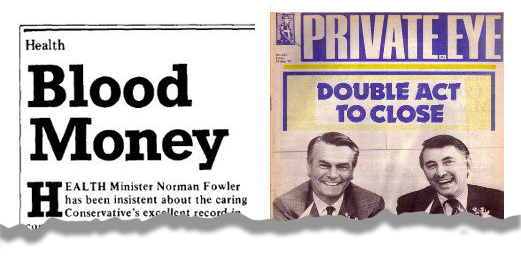
Health Minister Norman Fowler has been insistent about the caring Conservative’s excellent record in combating AIDS.
Regular announcements have been made about just how many millions are being spent on fighting the spread of the disease, treating the more than 750 identified cases and improving public awareness.
However, Fowler, like his predecessors, conveniently ignores how the Thatcher government’s refusal to spend money was a prime factor in more than a thousand British haemophiliacs being given the AIDS virus courtesy of the NHS and contaminated American blood products Britain was not supposed to need. Fowler recently argued against compensation to those haemophiliacs at risk from AIDS through NHS treatment.
The human cost so far is that 23 haemophiliacs are dead and 100-200 could die. Only homosexuals, among the high risk groups, have suffered a higher death toll. Yet most of these deaths could have been prevented. They died not through ignorance but ideology.
Ironically, far from saving money – as was intended – the taxpayer has had to spend millions a year on imported blood products while waiting for the completion of a new blood products laboratory which will cost three times what it was estimated in 1979.
The facility at Elstree, north of London, is now expected to achieve self sufficiency for Britain in blood products by next year. Eleven years after this was first promised.
The explanation of why so many haemophiliacs have contracted, or risk contracting, AIDS through using contaminated blood products is a tragic combination of NHS politics, bureaucratic bungling and a greater concern for cutting costs than saving lives.
Pre-AIDS, when carving up the NHS cash cake, haemophiliacs were too often seen as a low priority and already over-indulged minority.
It was never quite important enough to halt the import of a product known to carry a risk of infection and which could and should have been made in Britain.
Haemophiliacs require regular supplies of the blood clotting agent Factor 8 to prevent crippling bleeding incidents. In the early Seventies a form of concentrated Factor 8 became available, offering the opportunity of home treatment for the first time. However, while the National Blood Transfusion Service could ensure enough donors to provide the plasma from which Factor 8 is extracted, facilities for collecting the plasma and producing the concentrate were wholly inadequate.
So in 1973 the NHS began importing Factor 8 from commercial blood products companies, mostly in the United States. It was very quickly realised, when the first outbreak offered among British haemophiliacs a year later, that the US products unfortunately carried a high risk of hepatitis. This was inevitable as the plasma donors were mostly drug addicts, derelicts and the poor, drawn from the Skid Rows of American inner cities by the offer of a few dollars.