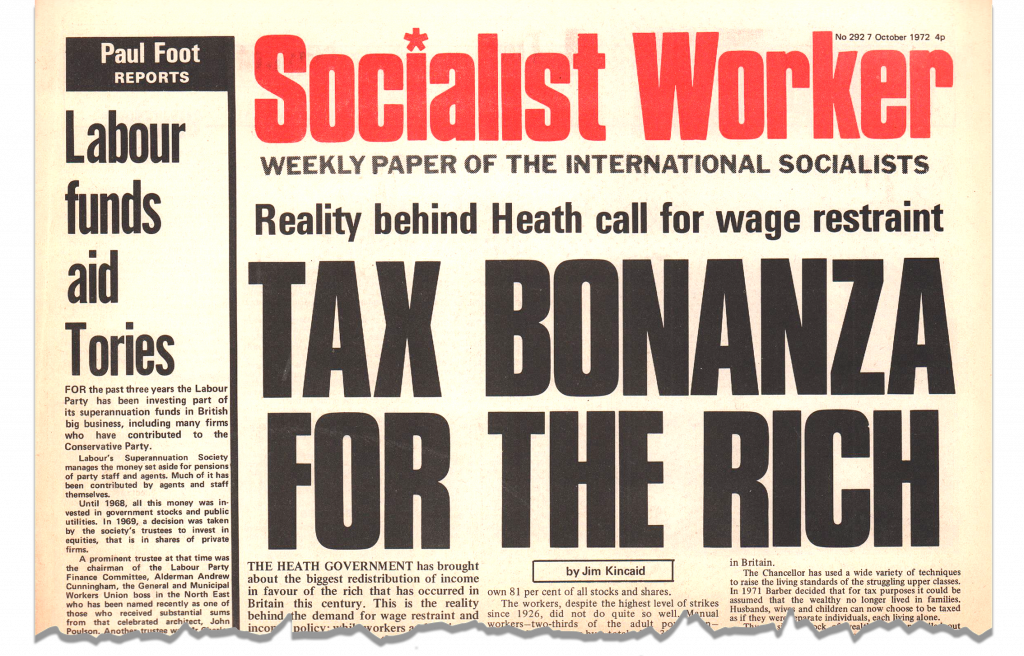
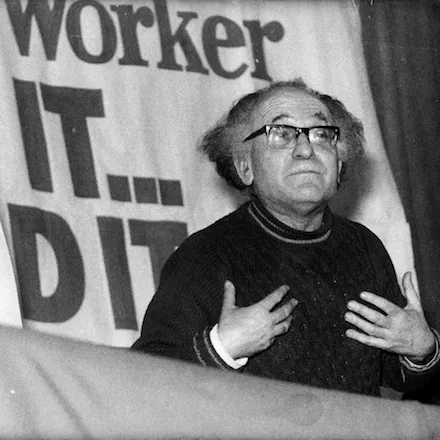
When Paul decided to leave Private Eye in 1972 he could have gone to almost any national newspaper in the country, but the pull of his politics outweighed any other consideration. In the 1970s, Socialist Worker was expanding in size and circulation, new printing presses were being bought, the political opportunities for left-wing socialists were considerable. There was an audience for radical ideas and radical writing.
He joined Socialist Worker as a journalist, with a column of his own called ‘Footprints’, became editor for just over a year between March 1974 and June 1975, and then returned to what he loved most, writing about workers’ struggles.
The buoyant politics that had brought Paul to Socialist Worker had retreated by the late 1970s: there was a general level of political collapse among the unions and the British working class which, together with a growing disillusionment in Labour politics, would lead to the election of Margaret Thatcher as prime minister the following year and the start of the long era of neo-liberalism.
After he left the paper, Paul continued to write for Socialist Worker, taking up the challenge of a weekly and then fortnightly column, which ran from 1984 until his aneurism and hospitalisation in 1999. Even that didn’t stop him, although his writing continued in a more irregular pattern from then to the end of his life.
Article examples on the Marxist Internet Archive
Ronan Point was a tower block in East London, that suffered a partial collapse due to a gas explosion on the 18th floor which triggered a structural failure, resulting in four deaths and 17 injuries
3000 people ‘at risk’ in high sky-high death traps
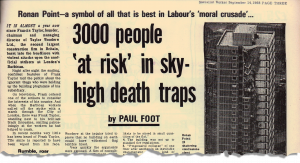
September 1968
“It is almost a year now since Francis Taylor, founder, chairman and managing director of Taylor Woodrow Ltd., the second largest construction firm in Britain, burst into the headlines with violent attacks upon the unofficial strikers at London’s Barbican. Night after night the smiling, confident features of Frank Taylor told the public about …

In 1968, Northern Ireland plunged into deep civil unrest. The Catholic minority, inspired by the global civil rights movement, protested systemic discrimination under the Protestant-dominated government. Clashes between peaceful activists, the police, and loyalist counter-demonstrators ignited the decades-long conflict known as the Troubles
Derry, the grim facts about Ulster’s divide and rule city
December 1968
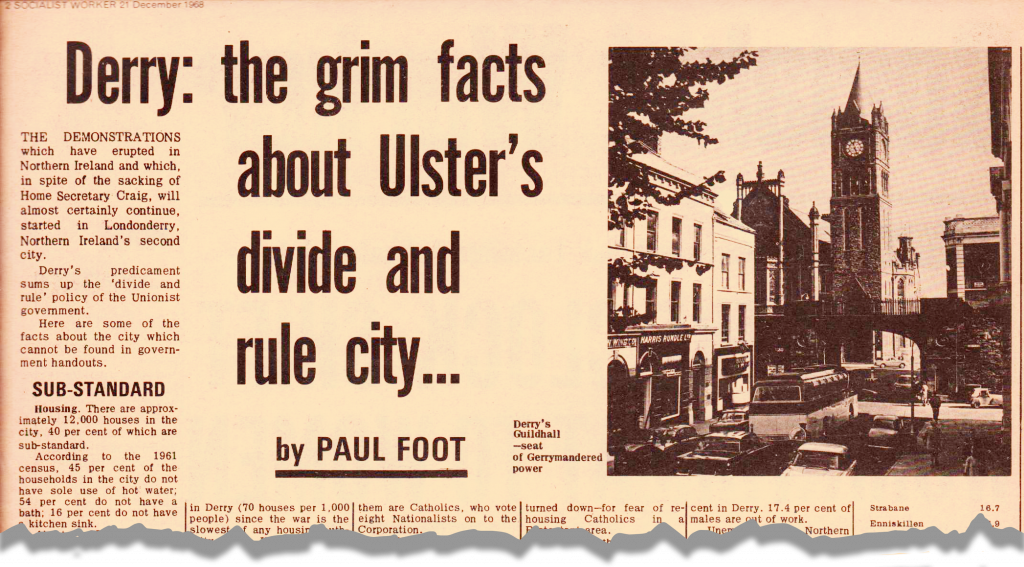
THE DEMONSTRATIONS which have erupted in Northern Ireland and which, in spite of the sacking of Home Secretary Craig, will almost certainly continue, started in Londonderry, Northern Ireland’s second city.
Derry’s predicament sums up the ‘divide and rule’ policy of …
In 1969, Anguilla was the site of the “Anguillan Revolution”, an unusual uprising where the island declared independence from St. Kitts to remain a British territory. The bloodless conflict ended with a British invasion in March 1969, an event humorously dubbed the “Bay of Piglets”
West Indies: 20 years of pirates, profits and blood
April 1969
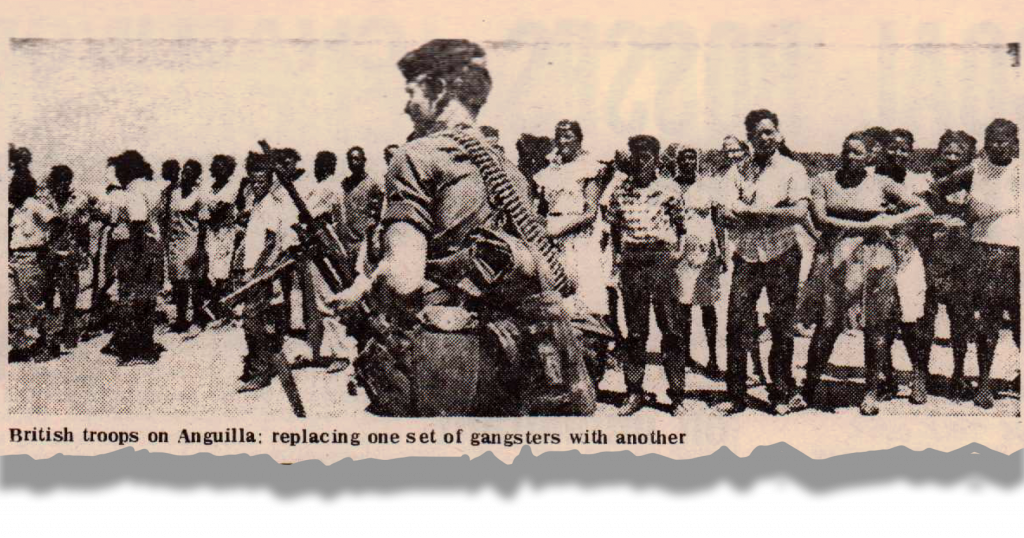
IN JANUARY 1935 there were what the Governor of the Leeward Islands, Sir R. St. Johnston, called in his report ‘some troubles’ on the island of St.Kitts. Leaders of the newly-formed Sugar Workers’ League, protesting at the rate of pay (one shilling a day), marched around the plantations calling a strike.
The Governor found this especially annoying, because he was having a garden party at the time. He summoned up a frigate and a few platoons of infantry …
Clay Cross made national headlines when its Urban District Council — led by future firebrand MP Dennis Skinner — rebelled against the Conservative government’s Housing Finance Act
Clay Cross double-crossed
April 1974
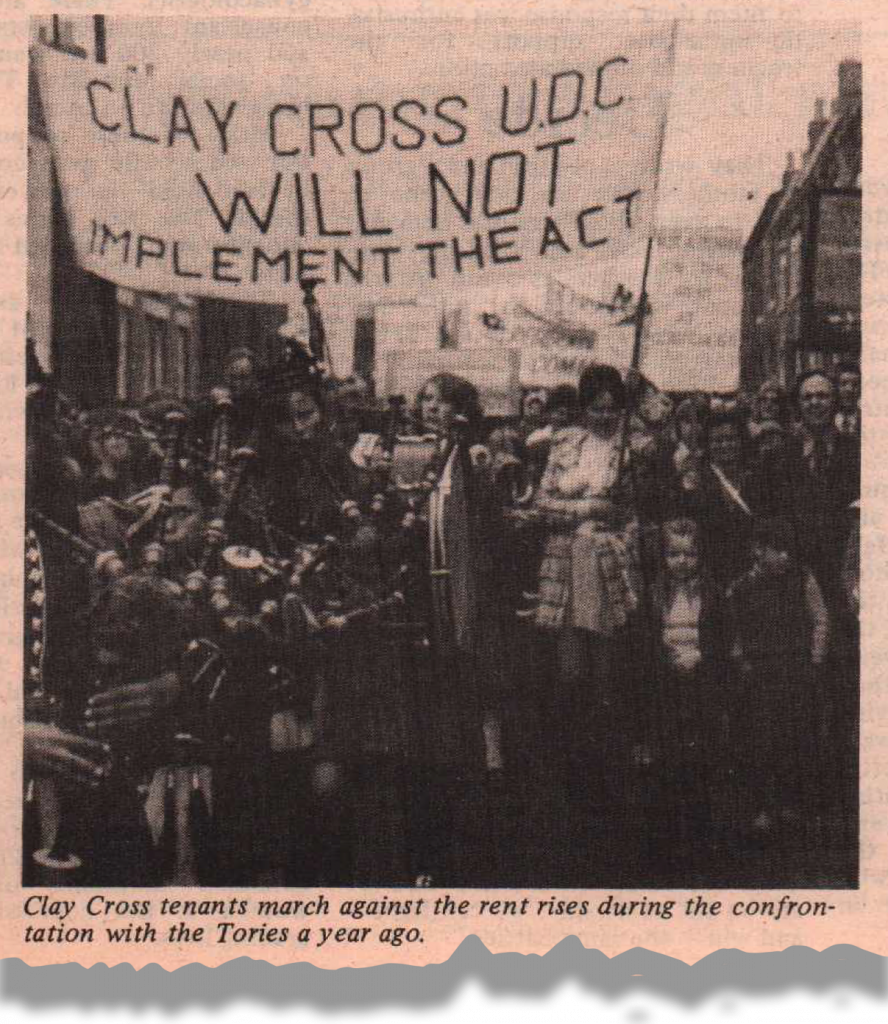
ELEVEN WORKERS at Clay Cross, Derbyshire, who risked their freedom and their livelihood in the fight against Edward Heath’s Tory government, have been snubbed by the Labour government’s first month of office.
They are the councillors who refused to implement the Tory Housing Finance Act. They saved the council tenants of their town thousands of pounds in unpaid rents. As a result, they …
Blair Peach was killed during an Anti-Nazi League demonstration in Southall against a National Front election meeting in the town hall. He had been struck on the head by a member of the Special Patrol Group (SPG), a specialist unit within the Metropolitan Police Service
Blair – our brother, our friend
June 1979
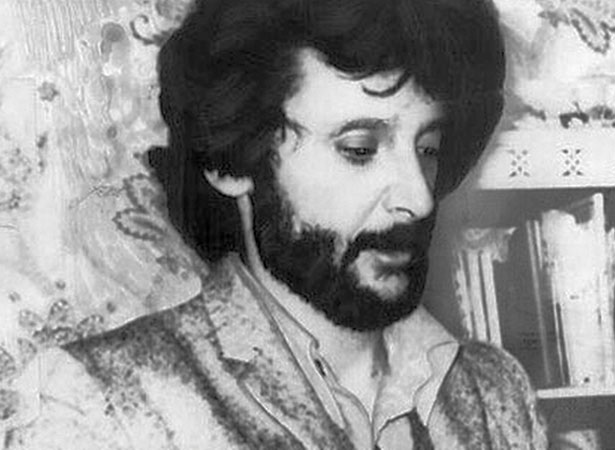
From Manchester to Tolpuddle the martyrs of our movement have been humble people. They neither sought the limelight nor found it. They were unknown except to a close circle of friends and family. They became famous not because of their ambitions nor their vanity, but because…
Around 1945, Tony Cliff, who was living in British-occupied Palestine, wrote an influential foundational analysis on Zionism and imperialism, Middle East at the Crossroads, published in early 1946
Tony Cliff and Zionism
January 1988
Pondering the critical comments of the representatives of American Jewry on the Christmas upheavals in Gaza and on the West Bank, I go to Central Books to buy myself a Christmas present. I know there is one there for me because Dave…