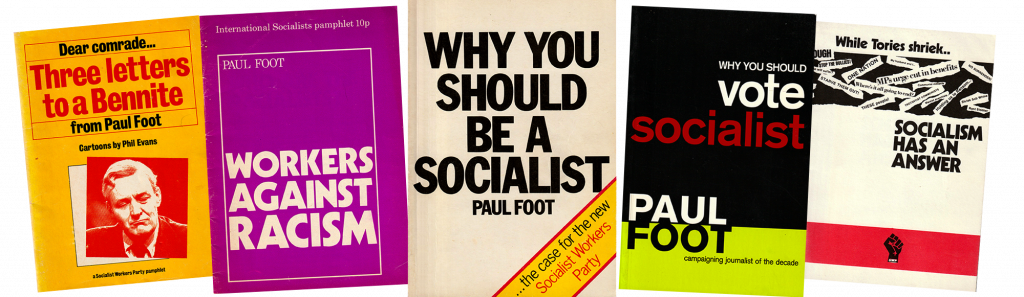
Over the course of his life, Paul wrote a lot of pamphlets. He agreed with George Orwell: ‘For plugging the holes in history, the pamphlet is the ideal form.’
Altogether, Paul wrote eleven short pamphlets and another three longer ones, co-wrote another, and wrote introductions to at least three more. Some were designed to plug those holes, in particular the
pamphlets of the 1980s, on Wat Tyler, George Orwell and A. J. Cook.
Others were more agitational – the self-explanatory How to Fight the Tories published in 1970, after the election of the Heath government, for instance; or The Postal Workers and the Tory Offensive from a year later, following the sell-out of the postal workers’ strike.
Some were more explanatory: Unemployment: The Socialist Answer, which Paul wrote in Glasgow in 1963, and Workers against Racism a decade later. And there were those that were clearly directed at the debate of the day: Socialism Has an Answer was a reprint from Socialist Worker in January 1979, in the run-up to the election that Margaret Thatcher won a few short months later. Three Letters to a Bennite followed in 1982, as Paul and the SWP tried to stem the tide of people leaving to join the Labour Party, in his view a political dead end.
The first of the longer pamphlets, Why You Should Be a Socialist, appeared in 1977, when the International Socialists relaunched themselves as the Socialist Workers Party, at a time when Labour’s popularity was declining in the Wilson and Callaghan years. The second, The Case for Socialism, was published in 1990, after the fall of the Berlin Wall.
While most of these pamphlets were published by the SWP, in a variety of guises, there was just one of the longer ones written for a commercial publisher. In the late 1980s, the publishing house Chatto & Windus brought out a series of ‘Counterblasts’, in which, according to the publishers’ description, Britain’s finest writers and thinkers confronted the crucial issues of the day ‘in the best tradition of pamphleteering’. It was music to Paul’s ears.
His contribution, Ireland: Why Britain Must Get Out, published in the summer of 1989, began with a simple proposition: ‘There is a solution to the problem of Northern Ireland. There is a way out of the endless cycle of killing and terror. It is for the British government to cut its connection with the state of Northern Ireland, and to get out of Ireland.’

Pamphlets available to read on the Marxist Internet Archive:
Unemployment: The Socialist Answer, 1963
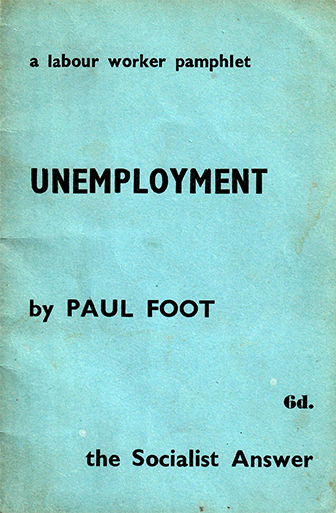
“All the time this struggle is going on. And wherever the issue is boss against worker, the worker must be supported. Every wage claim, every strike in workers’ interests must be supported, every sacking bitterly opposed. Yet all this is useless unless, somewhere, the idea of socialism begins to take root among the workers. For socialism, workers’ control of all industry, agriculture and services, is the only real hope for the end of unemployment.”

The Postal Workers and the Tory Offensive, 1971
“The postal strike of 1971 was by a long way the biggest industrial dispute in Britain since the war. It lasted exactly the same number of days as the next biggest – the seamen’s strike of 1966 – but there were more than four times as many workers on strike. In terms of days lost and numbers of strikers, no other dispute can compare with it.”
Workers Against Racism, 1973
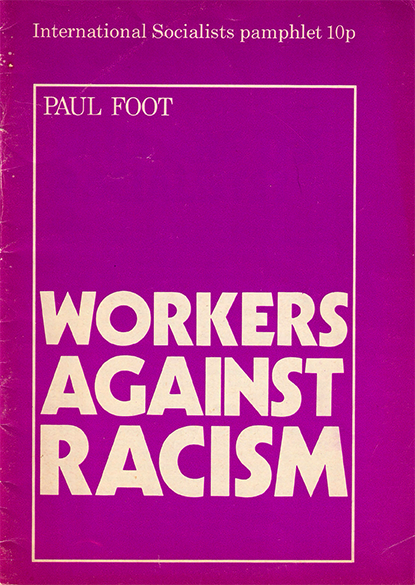
“An unlikely selection of people have been combining over the past few years to pass on an important message to workers. The tones of the message differ from person to person, but the theme is always the same. It is that black people in Britain are the cause of most of our worries.”
Stop the Cuts, 1976
“The Government and the spokesmen for big business pretend that living standards are ‘levelling off’. They argue that the cuts which they are imposing in the public services are just a ‘standstill’. The facts about all our public services show something quite different. They show that the services are getting worse – and more expensive.”
Why You Should Be a Socialist, 1977
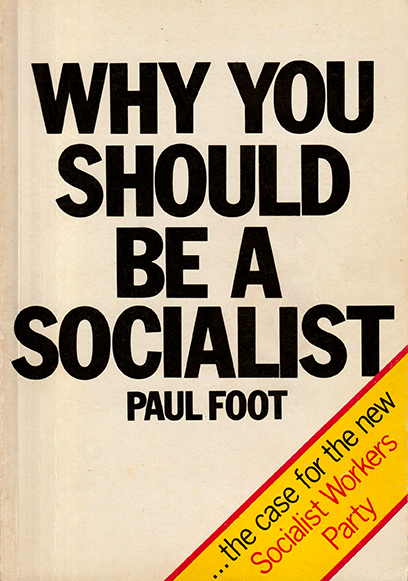
“We do not have to spend the rest of our lives, and to leave our children to spend the whole of their lives, wrestling in struggle against a mean and despotic ruling class. Society can be changed, but only if masses of working people abandon the rotten shipwreck of the ‘leave it to us’ reformers, and commit themselves to change from below.”
‘This Bright Day of Summer’: The Peasants’ Revolt of 1381, 1981
The text of this pamphlet was first given as a talk in celebration of the 600th Anniversary of the Peasants’ Revolt at the Socialist Workers Party Rally in Skegness, Easter 1981.
Three Letters to a Bennite from Paul Foot, 1982
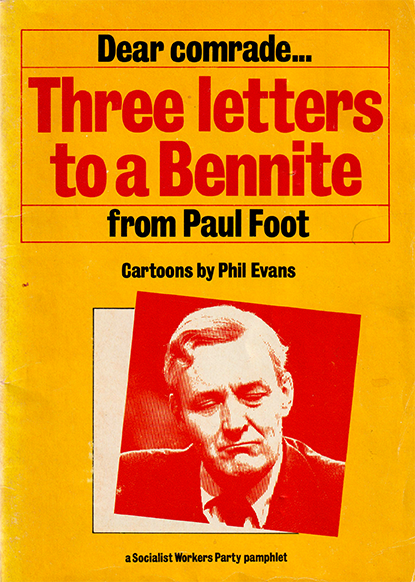
“Forgive me if I point out that it is not quite clear where you stand. Are you really for an uncompromising battle ‘for the soul of the Labour Party’ as you rather ridiculously put it? Are you for another deputy leadership fight next year? Or are you for letting bygones by bygones and trying to paper over the cracks until the next election?”
‘An Agitator of the Worst Kind’: A Portrait of Miners’ Leader A.J. Cook, 1986
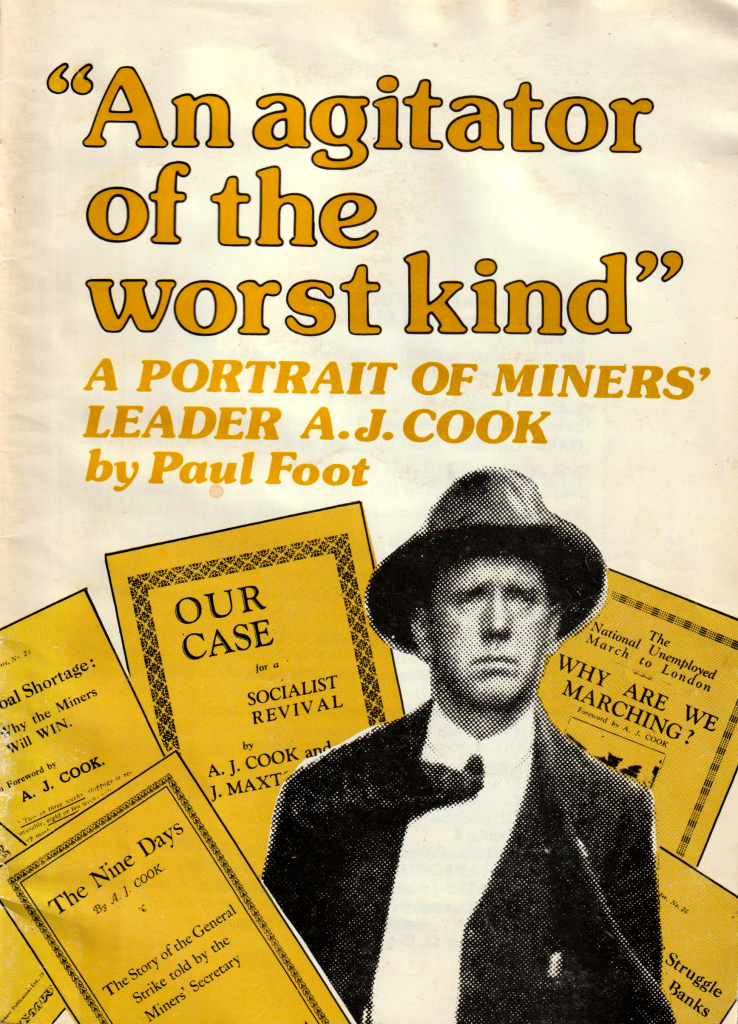
“Who was this raving, tearing Communist who had caused such consternation in the upper echelons of the TUC, and whose election at 39 as leader of one of the largest and most powerful trade unions on earth had shocked the press and the government?”
The Case for Socialism, What the Socialist Workers Party Stands For, 1990
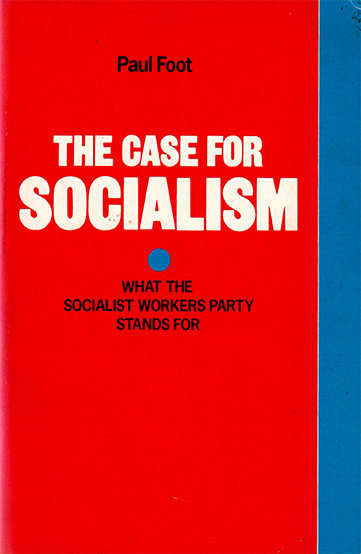
“Truth is the opposite of lies; love is the opposite of hate. And socialism is the opposite of capitalism and therefore entirely different from what it has been held up to be for 50 years and more. The argument in this book is that socialism, real socialism, is the only alternative to capitalism; and it is still worth fighting for.”
Why You Should Vote Socialist, 2001
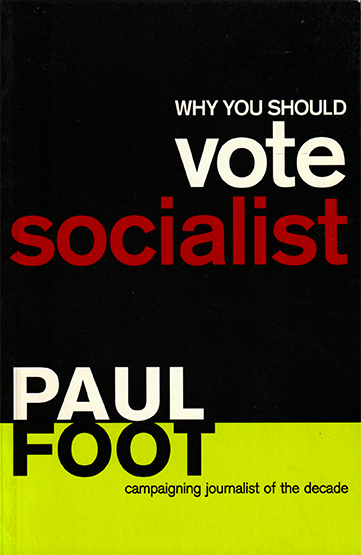
“Slowly at first, but with gathering conviction, the New Labour government has stubbornly enforced the anti-union laws promulgated by Thatcher and Norman Tebbit, continued to dismantle local democracy, and privatised everything in sight.”
This pamphlet sets out the record of that drift into reaction, and offers socialists a chance to use their vote to help stop it.